Showing posts with label India. Show all posts

7.12.09

Reading Mourad with trepidation

.

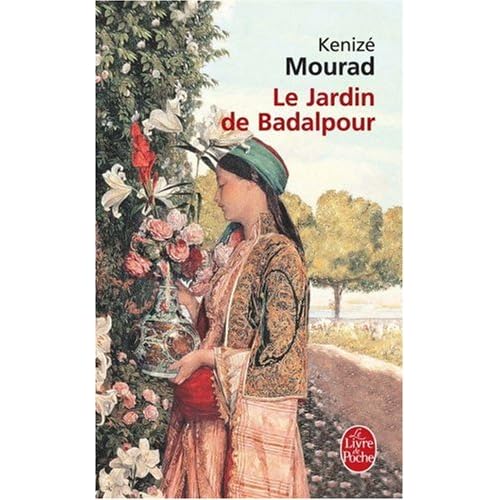
Cover art: John Frederick Lewis (1805-1876)1, Lilium Auratium;
the vase is an Iznik (?) Imari2

Kenize Mourad, granddaughter of one of the last Sultans of Turkey (Murad V), and daughter of the former Raja of Kotdwara (in Uttarkhand), comments early in her book3, while describing her father's obsequies in the old family seat somewhere "near" Lucknow (near by Indian standards, of course):

De compassion, aucun de ces paysants n'aurait l'idee d'en eprouver pour cette homme qui fut leur maitre mais sut aussi les proteger, les aider dans l'infortune et accompagner leur vie non sans bonte, les exploitant moins qu'il n'est coutume. Car ceux qui exercent le pouvoir ne sont plus consideres comme des humains, de par leur puissance ils appartiennent a l'univers des dieux. Et qui aurait pitie des dieux?

Suddenly I am seized by fear and foreboding: what does Kenize Mourad, raised and educated in France-egalite, know about divine kingship of the feudal society? In her first chapter she discusses frankly her emotions: anger at the family for not having notified her earlier of her father's critical condition, grudges at her brothers for having been brothers (and thus more important in her father's eyes), at her father for -- as yet we do not know what.

But do we -- do I -- want to know?

Mme Mourad sounds like a modern French woman: confident, proud, and prepared to bare her emotional entrails which she is convinced are important and deserving of universal knowing. (Georges Sand comes to mind). Modern French women are no doubt interesting in their own right; but there seems to be just one way of being a modern French woman, and we already know what that is... More importantly, can one expect them to tell us anything truly insightful about the lives and minds of real kings and princes of another time and place, even if they should be their own flesh and blood?

I will read on Kenize Mourad, but gingerly and with trepidation. I have already heard everything westerners -- especially women westerners -- have had to say about Indian divine kingship, religion, love and family relationships, and I am sure I do not want to read it yet again.

*

This is just the gist of my misunderstanding with Angelica, too. I had told her that the emotions and the inner states of knights are a closed book to pretty much everyone knights ever meet in the modern world. She did not believe me: "If you behave in a certain way, she says, people will always understand it". But then -- how could she possibly know?

Akhila has known me longer and closer; she is also older and more perceptive: "I don't get you", she says with a winning smile. That, of course, is what one aims to achieve: since to be known is to be available: to be scrutable is to be common.


1 Lewis was a so-called Orientalist, and long dead and forgotten before that term was thrown into opprobrium. In fact, the fortunes of his art revived suddenly in the 1970's, just about the time when the infamous essay by Edward Said was being hatched; from nothing his works quite suddenly began to command seven figure prices. (Indeed, was Said perhaps responding to Lewis's reviving fame?) I'd like to read more about how Lewis was revived. Anyone can recommend a book?

2 To this day the most popular style of pottery decoration in Morocco is a kind of homw-grown variation on Imari. Is this the case across the Arab world?

3 Le Jardin de Badalpour, not, apparently, available in English, though, like the Kawabata-Mishima letters, you could read it in half a dozen other European languages any day of the week.

28.10.09

That travel need not broaden the mind, again

This reviewer of Hindoo Holiday appears to me to mistake for style what is merely the usual Indian reality. The writer's prince is zany, but then so are most your interlocutors in India; besides, seeing a naked man armed with a spear is not nearly as odds-off there as it is wherever the reviewer comes from. (Kansas?) I have only spent 18 months in India, and yet have seen several naked armed men; indeed, it was the sheer ordinariness of the naked-armed-with-spear business which convinced me not to write an India travelogue -- it's simply too easy to slip into an endless catalog of the merely weird.

Perhaps one day I will write something about my stay in India. When I do, I will be meaning to write about the ways in which India has changed me and will skip the naked-with-spear and the my-grandma-poisoned-my-grandpa stuff. One's encounter with India can really be a lot more profound than the campy gossipiness of this book, but that takes time, commitment and brains; and the time, at any rate, seems to have been short in this case.

And it usually is. Says authoritatively a character in Wharton's Age of Innocence: "You need three weeks to do India properly." Quite.

7.9.09

Some instances of art copying life

.

Sometime in the 13th -- or perhaps 14th -- century this sculpture was cast in the kingdom of Thailand. It was incredibly successful: so successful in fact that it occasioned a whole world of copies. The vast body of lost-wax bronze statues which arose as a result of all this copying is today referred to by art historians by the name of Sukhothai -- the name also given to the particular epoch in Thai history (1238 - 1438 A.D.) What you are looking at is therefore a Sukhothai Buddha.

How odd he looks: a drooping, bulbous nose, extraordinarily long, apparently jointless fingers (in the gesture of Vitarka Mudrā, the gesture of discussion and transmission of Buddhist teaching) -- and limbs (which look more like slithering spineless snakes or worms than limbs), broad, deliciously round shoulders, oversized, round feet, and prominent, nippled breasts make for a strange, otherworldly figure. To me, this Buddha looked like nothing I have ever seen; certainly, he did not look Thai.

Used to the fact that Buddha representations in Asian art can be pretty unnaturalistic, ascribing to Lord Shakyamuni various anatomical features which ordinary mortals do not possess -- a bump on the top of the head symbolizing blazing intellect (the usnīsa), humongous, hanging ears (I have forgotten what they symbolize -- surely, the Chinese belief that men with long ears are good at making money is derived from the Buddha ears, not the other way around), etc. -- I have assumed that I was looking at an idealized image of the saint; an otherworldly image; a representation of what a heavenly creature might look like -- somewhat akin to western European winged seraphim, or the saints from Orthodox icons with bony narrow faces and bulging eyes.

I was curious to see what all these odd elements symbolized, but slow at finding any discussion of them. I was especially curious about the facial features. Here, look closely:

What an odd face, eh? And, in all honesty, difficult to characterize as beautiful. Why, oh, why, I wondered, did the Sukhothai Thais imagine lord Buddha to have looked like this?

I did not discover the answer until several years later when I boarded a Sri Lankan plane: everyone on it -- stewards and stewardesses, the pilot, even the luggage-handlers -- looked like this -- yes: bulbous nose, drooping eyelids, even -- yes -- wormlike fingers on pudgy hands.

The answer to the mystery of the Sukhothai Buddha's look is simply this: that he is a Singhalese.

This is not surprising. Sri Lanka is Theravada Buddhism's Rome. To Theravada nations -- Burmese, Thais, Laotians -- Colombo and Candy are what Jerusalem and Rome are to Poles. The Polish Jesus looks Italian; is it a surprise then that the Thai Buddha would look Sri Lankan?


*

(A Sherlock moment: Buddhism was introduced to Thailand from Sri Lanka on several occasions -- which are sometimes referred to as renaissances, or revivals; one took place at the beginning of the Sukhothai era; could it be that this Buddha was simply imagined by his creators to look like the missionaries arrived from Sri Lanka? And if so, does the Sukhothai Buddha represent a particular person? Or perhaps -- the Sukhothai Buddha is merely a Thai copy of a holy image brought by the missionaries from Colombo?)

*

Now skip about a thousand miles to the west, to Khajuraho, in Madhya Pradesh -- and about three hundred years back.

I am not sure why I was not amazed by all the sex on the walls of her temples -- by which everyone else seems to be so amazingly amazed. (Just look at page one of the Google image search, here, if you have any doubt: not one of the pictures on page one does not sport an erect penis).

Perhaps I am jaded enough to admit to myself what most men cannot -- or will not -- that not much of the sex we have is really worth having; most of it falling in the -- well -- blazé category, I suppose?

Or perhaps I was more taken with the rain-making ritual (as if to reinforce me in my obdurate atheism, it rained all around Khajuraho but never on it as long as the prayers lasted); or the Navratri festivities in the village; or the Bhil dodeci-annual dip in the Betwa (which, I bet you did not know, is the twelfth holiest river in the world); or with all the villagers of Khajuraho -- some 12 thousand of them -- whom I encountered doing their coeducational public morning squat on my first (and only) walk through the countryside.

Or perhaps with the cows wondering aimlessly among the monuments -- they seemed to be ruminating on something philosophical; or -- the goats climbing them?

But this is not to say that I was not impressed by the statuary. I was. I was completely and wholly taken by a particular girl -- a recurring girl -- recurring in several different places on the each of the 24 temples.

Now, the amount of statuary put on the temples probably meant that a central requisitioning office in charge of the construction sent out to the workshops orders saying "twelve free standing of statues of a girl removing a thorn from their foot (type A); twelve statues of a girl looking at herself in the mirror (type B); and another twelve of a girl gazing sideways (type C), by Friday afternoon" because certain stock images repeat again and again throughout the complex.

And this means that the girl I mean was a stock image -- she was a trick -- the trick of a one-trick-pony artist -- developed by a particular workshop who then sold her to the requisitioning department -- repeatedly -- and then did her in numerous copies, mechanically, reliably, fast: everyone just like the other. ("Karna, we have another order for the big nose", the boss would say. "Yeah, ok," said Karna, and setting aside his paan and lifting his tools set about chipping yet another standard sized block of stone).

But this did not matter. I saw her everywhere and everywhere she had the same impact on me; everywhere she seemed to be looking at me secretly, from beneath her drooping eyelids and down her magnificent nose: a girl from 1000 years ago spying on me from all sorts of places -- from around corners of buildings, from up top, from down below -- in the falling dusk.

Like the Sukhothai Buddha she looked like no one I have ever seen before: an impossible human being; she had huge eyes and a monstrous, gigantic, fantastic nose, which gave her an incredibly beautiful, bird-like -- peahen-like -- air:


plus -- narrow lips, pointed chin, short neck, broad, round shoulders, fantastically large breasts, impossibly, boyishly narrow hips and slim, long, long legs.

She looked like no other statue ever made in India and like no person I have ever seen there.

Or anywhere.

Like the Sukhothai Buddha she seemed an impossible person, an artist's fantasy, an invention, impossible, but wonderful; his idea of what life could be like if it could only break the bounds of possibility: one third bird, one third goddess, one third boy.

Impossible that is until -- until -- I met her here, in Lisbon.

I am sorry, but I must know, are you from? I asked her, amazed.

Kutch, she answered.

Kutch. In Gujarat. 600 kilometers to the east of Khajuraho. Not impossible, I guess.

I am sorry I don't have her picture to show you: all the photos I took of her back in Khajuraho I have left in Thailand. And her modern living copy here would not be photographed for any money at all. So the best I can do is show you this -- which is another stock image from Khajuraho, perhaps from the same workshop. It is the same girl -- or, except for the width of her hips -- nearly the same. Note the nose, the eyes, the shoulders, and the impossibly long legs.


*

Now, you know what this means, of course: that art historians discussing imagery of statues from behind their stationary desks -- those who have not traveled the world to see what actual people look like -- have no idea what they are talking about; and that art really copies life to a much more faithful degree than we could have ever supposed.

It also means something else: that the old racists of the 19th century were completely and absolutely wrong but also -- a little right. There are not 3 (or 4 or 5 or 6) races of men; but there are definite types of looks -- numerous, yes, but limited, and readily recognizable.

Perhaps one could say that there are a million human types on earth?

A million races of man?

20.8.09

Two musical curios; and then two more

.

(Portrait of the artist as a young man)


Here is the BBC Indian Voices prom of Aug 16, still available for listening -- probably until the 23rd. It starts with two curios: a processional Ganupati chant -- five thousand year old religious music invoking Ganesha, the Elephant-headed God, the Remover of Obstacles; followed by a choral rendition of a typical tabla practice.
(Footnote: there are many ways to strike the tabla, and each type of stroke produces a different sound; each stroke has its own name - the names are the Hindustani equivalents of bang, bam and thuck. All North Indian musicians must study the tabla and one part of the study is to memorize the taals, or rhythmic cycles, by learning to sing the sequences of bangs and thucks. A kind of solfage, I suppose, but for a total newcomer -- the proverbial white man -- the effect is extraordinary -- what on earth is this? we pinko-grays exclaim to ourselves).

I said these were curios.

*

But then comes the 81 year old Pandit Ram Narayan with his daughter Aruna, playing, two-sarangi style, two morning ragas in a sea of wonderful, strange, mysterious, raptuous sound. The sarangi -- a kind of viola da gamba, its name -- so rang -- means a hundred colors -- is a metal-stringed instrument -- and therefore I am not sure one can call hat they do sawing wood -- perhaps metal pulling is a better term, but the sound they produce is absolutely extraordinary. Listen to the sections around minute 25-27 -- it is like the howling of peacocks in the canopies of great tropical trees on a moonless night; or hear the section from minute 46 to minute 52 -- it is like a pair of twelve-foot black-and-gold cobras dancing on their tails.

I have heard plenty of sarangi in my life, but the sound this father and daughter team produce is absolutely unlike anything I have heard before. Interestingly, Ram Narayan's instrument, produced in the 1930s in Meerut, is a storied instrument -- a meibutsu -- like our Stradivarii; and his strings are - unusually for sarangi -- western harp strings; I think it is possible to hear the difference between his and hers as a result.

To me their performance of the two ragas (in an abridged 20 minute version -- abrodged for us attention-deficit-disordered) illustrates how much good music making relies on simply being able to produce good sound, an aspect of music my cellist girlfriend used to call -- sawing wood.

EP studies show how much information - regarding the boy's suitability -- female owls get out of merely hearing the sound of the male hoot. The human ear is as sensitive -- and, incredibly -- or credibly, perhaps, if you have learned to trust Darwin and Dawkins -- in the same ways; it takes only a few listenings -- little more than brief familiarity -- for human females to pick the suitable owl male by merely hearing his hoot. Literally, given the chance to hear a few, we, humans, can tell the healthy owls from the quality of their voice. Would you have guessed as much?

The difference is between hoot and hoot; this comes down, sometimes, to little more than the difference between drawing the bow across the string with just the right amount of strength or -- not.

*

Note something else, too: how much more interesting this music sounds compared to most western jazz. Both styles of music are improvised, but the difference is -- that Indian classical music has a lot more structure -- more precise (and complex rules) regarding how to improvise -- what types of things can follow what types of things, etc. This prevents simplistic treatments.

Moreover, Indian musicians usually agree a plan prior to a concert -- when I do something like this, you will do something like this, ok? -- The greatness of their improvisation, it turns out, lies in not having too much of it.

*

And another curio, while we are on the subject of music: here, the little g minor fugue in a graphic representation, each harmonic part in a different color. It's useful in helping the newcomer to the genre develop that difficult skill of listening to several harmonic parts simulataneously; but it is fun to look at for us all.

To me it is also useful in another way: the music is computer generated, and therefore played exactly come scritto; and it sounds a little -- well, mechanical. Dead. I can think of no better way to expose Sviatoslav Richter's lie than this; the man, when asked for the secret of his interpretation, invariably said: oh, I merely play come scritto. But he didn't -- as contrasting his rendition of the little-minor fugue with this, computer-perfect one clearly shows.

Our ears pick up something in his playing, something he put in -- something he put in almost certainly without knowing it himself.

Our ears are smarter than we are.