Showing posts with label East-West. Show all posts

7.12.09

Reading Mourad with trepidation

.

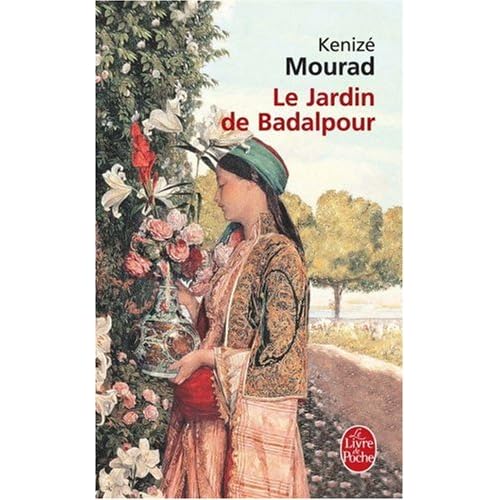
Cover art: John Frederick Lewis (1805-1876)1, Lilium Auratium;
the vase is an Iznik (?) Imari2

Kenize Mourad, granddaughter of one of the last Sultans of Turkey (Murad V), and daughter of the former Raja of Kotdwara (in Uttarkhand), comments early in her book3, while describing her father's obsequies in the old family seat somewhere "near" Lucknow (near by Indian standards, of course):

De compassion, aucun de ces paysants n'aurait l'idee d'en eprouver pour cette homme qui fut leur maitre mais sut aussi les proteger, les aider dans l'infortune et accompagner leur vie non sans bonte, les exploitant moins qu'il n'est coutume. Car ceux qui exercent le pouvoir ne sont plus consideres comme des humains, de par leur puissance ils appartiennent a l'univers des dieux. Et qui aurait pitie des dieux?

Suddenly I am seized by fear and foreboding: what does Kenize Mourad, raised and educated in France-egalite, know about divine kingship of the feudal society? In her first chapter she discusses frankly her emotions: anger at the family for not having notified her earlier of her father's critical condition, grudges at her brothers for having been brothers (and thus more important in her father's eyes), at her father for -- as yet we do not know what.

But do we -- do I -- want to know?

Mme Mourad sounds like a modern French woman: confident, proud, and prepared to bare her emotional entrails which she is convinced are important and deserving of universal knowing. (Georges Sand comes to mind). Modern French women are no doubt interesting in their own right; but there seems to be just one way of being a modern French woman, and we already know what that is... More importantly, can one expect them to tell us anything truly insightful about the lives and minds of real kings and princes of another time and place, even if they should be their own flesh and blood?

I will read on Kenize Mourad, but gingerly and with trepidation. I have already heard everything westerners -- especially women westerners -- have had to say about Indian divine kingship, religion, love and family relationships, and I am sure I do not want to read it yet again.

*

This is just the gist of my misunderstanding with Angelica, too. I had told her that the emotions and the inner states of knights are a closed book to pretty much everyone knights ever meet in the modern world. She did not believe me: "If you behave in a certain way, she says, people will always understand it". But then -- how could she possibly know?

Akhila has known me longer and closer; she is also older and more perceptive: "I don't get you", she says with a winning smile. That, of course, is what one aims to achieve: since to be known is to be available: to be scrutable is to be common.


1 Lewis was a so-called Orientalist, and long dead and forgotten before that term was thrown into opprobrium. In fact, the fortunes of his art revived suddenly in the 1970's, just about the time when the infamous essay by Edward Said was being hatched; from nothing his works quite suddenly began to command seven figure prices. (Indeed, was Said perhaps responding to Lewis's reviving fame?) I'd like to read more about how Lewis was revived. Anyone can recommend a book?

2 To this day the most popular style of pottery decoration in Morocco is a kind of homw-grown variation on Imari. Is this the case across the Arab world?

3 Le Jardin de Badalpour, not, apparently, available in English, though, like the Kawabata-Mishima letters, you could read it in half a dozen other European languages any day of the week.

21.10.09

Unsinn

Last Sunday I listened to a "cultural" program on the BBC; or so its title said. As it went on, I grew more and more alarmed, eventually, as a sort of self-defense, I suppose, breaking out in loud, silly guffaws, and going into spasms -- which in turn ruined my breakfast.

The program went something like this.

Some East End gallery specializes in up and coming artists ("buy it for a penny, sell it for a pound"); some of these artists were then interviewed: one, a Pakistani, makes large installations of planes locked up in huge blocks of ice which then slowly melt under harsh lights (yeah, duuude! pass the sheesha!); the interviewer asks her: you wear a chador (‘conservative’) but you make such modern works! (She doesn’t have a damn clue, does she?)

Meanwhile at the White House the What's-their-names are assembling a collection of borrowed art; it’s all modern (i.e. post-1950) of course, and American (probably has to be), including someone’s mediation on the square (!); except a DAY-ga (American enough when you pronounce it that way); except this last is judged risque (hush: legs); but the former first lady was also cultured, we are told: she owned a de Koenig (along with hyper-realist representations of West Texas landscape). Ah, the uncultured me: who de hoeck was de Koenig?

(Ah... upon consideration, don't tell me, I don't want to know).

Then, we were told, an Algerian band in France plays an electric oud. (Lousily, as it happens). You play such a mix of traditional and modern! gushes the interviewer.

(Huh?)

*

Sorry, I don’t understand this language, though everyone around me seems to.

Here, for instance, is Florian Zeller (who?) invited to speak at a kind of book fair in Egypt (probably because no one better would go), offering the humid fruit of his precious brain-tree:

if the Islamic world generally had difficulties with the novel, it was because it was living to a large extent in an era that belonged to the period before modern times, bogged down in archaisms that were by their essence incompatible with the foundations of the novel: freedom, fantasy, complexity, the ambiguity of all truths and the suspension of moral judgement. In this respect, the novel could easily become the battle ground between two civilisations.
(Er? Has Zeller ever read any archaic poetry, either Islamic or -- European? And if so, which part of his anatomy does he use to think (and speak) about it?)

The terrible thing: he thinks this drivel actually means something; and – oh, emperor’s new clothes! -- his Egyptian colleagues believe him! How's that for conversation: you issue forth a series of grunts, pretending that you're saying something; then, in turn, they do the same, pretending their grunts are a meaningful response. It's possible to keep this up for quite some time!

How do you explain to these... village people that the language they speak –which happily interchanges modern, western, good, inevitable, free, sexually liberated, and cultured is incoherent; that it is broken; that it means nothing; that it is impossible to say or think in it anything that makes any sense at all and that by speaking it they just bury themselves in some horrendous dark hole of the mind?

But then -- what could possibly be the point of explaining?

5.6.09

In which he is mean and sarcastic towards people and places he loves

The Museu do Oriente has a rich, well organized, well-labeled collection; it's also at the end of the world across three wrong sets of tracks and therefore real hell to get to; and in a building which makes me sick (it's a converted factory, all reinforced concrete, sloping ramps and delivery size elevators; and all shapes are relentlessly, unforgivingly straight and perpendicular).

It also has a gift shop which is not just ridiculously priced -- they buy for 3 euros and sell for 36 -- and full of utter and total junk -- not a single item of any value at all -- but is also totally wrong: the Asian outfits are not Asian, Burmese "laquerware" is plastic, the cabinet with tea-pots, helpfully inscribed "China" -- and "中国", for added authenticity, no doubt -- has not a single Chinese item in it and the tea implements in it are worse than useless. The museum does a good job popularizing some aspects of Asia; but its gift shop then completely undoes it all. I am entertained -- I can't help laughing out loud at some of the shop items -- but also shocked. Is the museum really allowed to do this? Is this not a violation of some kind of principle? A perversion of its educational mandate?

While waiting for my show I watched a documentary on Goa -- it featured interviews with people I know and pans of the insides of their homes; Mario looked younger and healthier than I remember him; perhaps the video predated my stay, Goa seemed somehow cleaner than I remember it.

The show was Bharatnatyam by Saju George, the Dancing Jesuit (oh, yes); not the greatest BN I have seen, Saju also tired towards the end of the first half and began to lose balance; still, for a priest -- I mean, an amateur -- he was really remarkably good, even excellent. For a moment I had a spell of aesthetic delight.

I left early, unwilling to remain behind to join the announced discussion regarding matters of dance and priesthood. I like the dance alright, it's the priesthood I can't stand.

*

Coming back by way of a fancy restaurant where overpriced vegetarian food is served in Indian thalis (a thali in India is a way to serve an economic dish) I noted that, it being Friday, it was time for their weekly Oriental Dance. The lights were on and the curtains drawn; I looked in. It wasn't Bharatnatyam, though, as the thali has always suggested to me, but, somewhat disconcertingly, North African belly dance. Except that it wasn't that either: it was a pretty lame ad lib by someone who has clearly not even taken lessons. That someone was pretty and was clearly having fun; she caught my knowing glance through the window; and gave me a pixish smirk: she was enjoying herself -- the fraud perhaps more than anything else ("I can't believe they are paying me to do this"). She was clearly English -- a tourist perhaps or a student -- it's such an English joke; and such a English smirk.

16.5.09

Histoire de l'empereur de la Chine


This is Emperor Sailing, one of a series of tapestries made at the royal manufactory at Beauvais, after a designs by Guy Vernansal, Jean-Baptise Belin de Fontenay and Jean-Baptise Monnoyer.

Writes Christie's who sold this particular work in 2004 (to Chicago Art Institute, as it happens):
[The series is thought to represent] the Chinese emperors Shun Chih (reigned 1644 - 1661) and Kang Hsi (reigned from 1661 - 1721) and their Empresses. Many of the images are based on Johan Nieuhof's Legatio batavica ad magnum Tartatiae chamum sungteium, modernum sinae imperatorem of 1665, which derived from the visit of a delegation of the Dutch East India Company to China from 1655 - 1657. For the botanical details Athanasius Kircher's China Monumentis qua Sacris qua Profanis of 1667 seems to have served as inspiration. As its title 'Roi de Chine' implied, the series was meant to illustrate the Chinese Royal Court, but many influences from other Far Eastern countries are discernable. The artists were keen to incorporate as many 'documented' exotic objects as possible in these tapestries.
Further discussion here.

Go here to zoom in on the remarkable detail.

Other tapestries from the series survive: here is one at the Getty (The Empress Sailing). The connection of these tapestries with Joachim Bouvet's book Histoire de l'empereur de la Chine, presentée au roy, 1699, printed by Meyndert Uytwerf, Paris, 1699 (and reprinted in Tientsin in 1940) is not clear; but Bouvet's connection with Louis XIV is clear: he was originally dispatched by His Most Christian Majesty with books and scientific instruments to the court of Kang-hsi as an envoy; he then served there as the emperor's tutor; and eventually became Kang-hsi's emissary to France.

One could say that one great difference between Louis XIV and the fellows like Steiner and Eco was that His Majesty, being a greater man, was interested in places outside of Europe. And how could he not be: on the opposite end of the globe there was someone like him, his double, perhaps his mirror image, a king of wisdom, virtue, art and gloire.

On precisely the other side of the world there existed his equal. There was one. How extra-ordinary.

6.5.09

George Steiner's Greek Fantasies

All men are aware of tragedy in life. But tragedy as a form of drama is not universal. Oriental art knows violence, grief, and the stroke of natural or contrived disaster; the Japanese theater is full of ferocity and ceremonial death. But that representation of personal suffering and heroism which we call tragic drama is distinctive of the western tradition. It has become so much a part of our sense of the possibilities of human conduct, the Oresteia, Hamlet and Phedre are so ingrained in our habits of spirit, that we forget what a strange and complex idea to reenact private anguish on public stage. The idea and the vision of the man which it implies are Greek.
What to do with a book which begins like this? Throw it out without advancing beyond page three? After all, how right can can be the rest of a book which starts out this wrong?

This is George Steiner speaking, the book is what made his enormous reputation (The Death of Tragedy) and the paragraph is unalloyed, 24-carat, pure-water nonsense. What do they do in Bali every day for a month during the Denpassar festival but enact private drama on public stage? Or in all the small towns up and down the Kerala coast in December where weekly all-night performances of Kathakali are given in temple courtyards? And if Sonezaki Shinju is not private suffering on public stage, then, obviously, neither is Hamlet nor Phedre.

Whence comes this urge of western scholars to define the West, us, Europe (whatever) by making a fantastic grand-sweeping and utterly false generalization about The Other? (And what is The Other anyway?) How comes it that grand scholars should think it's OK to spew this sort of garbage? And how comes it that no one stands up and screams in objection?