Showing posts with label Turkey. Show all posts

25.6.09

Çintamęty

.

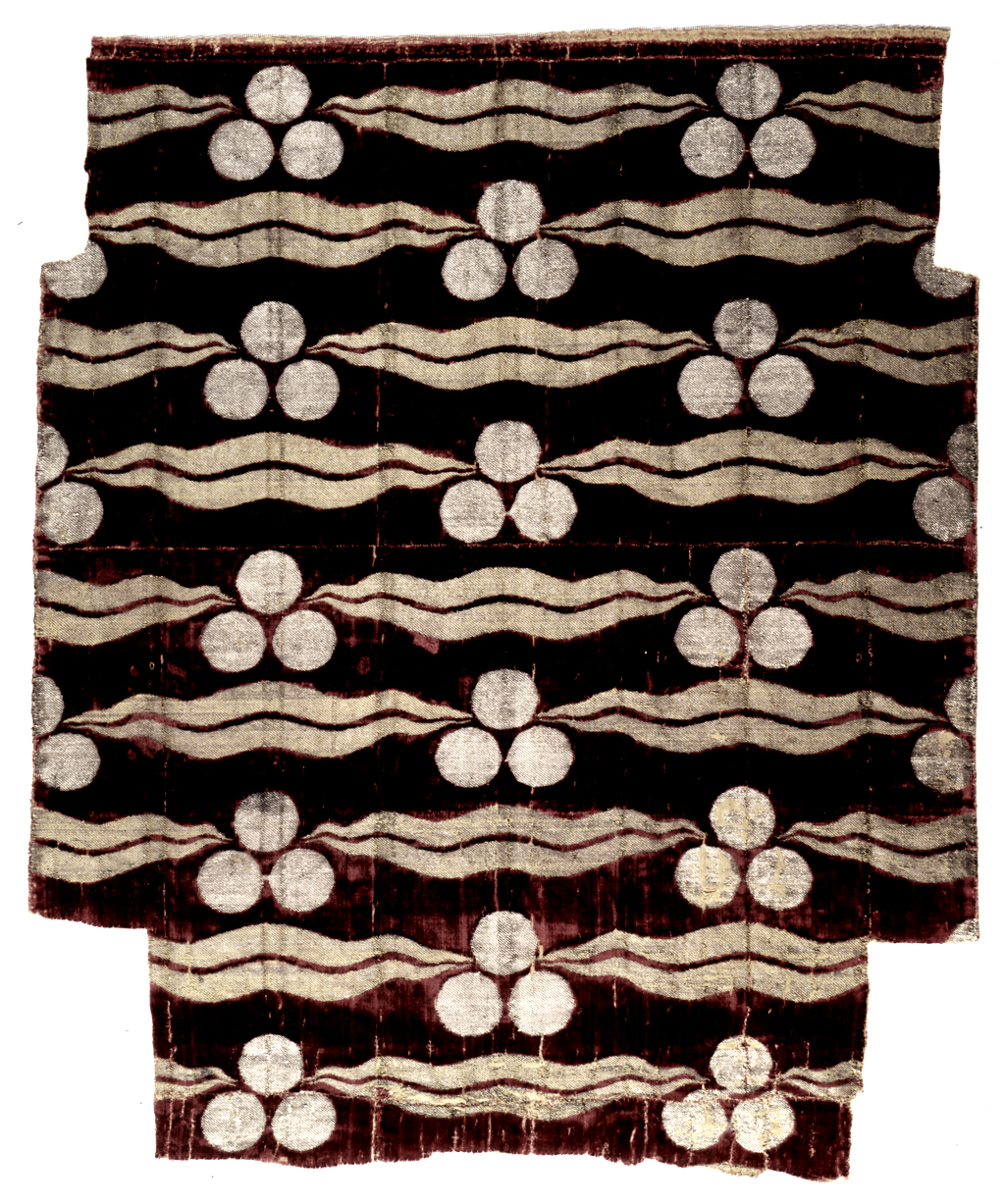
Pair of sleeves (kolluk), 16th century, Topkapi.

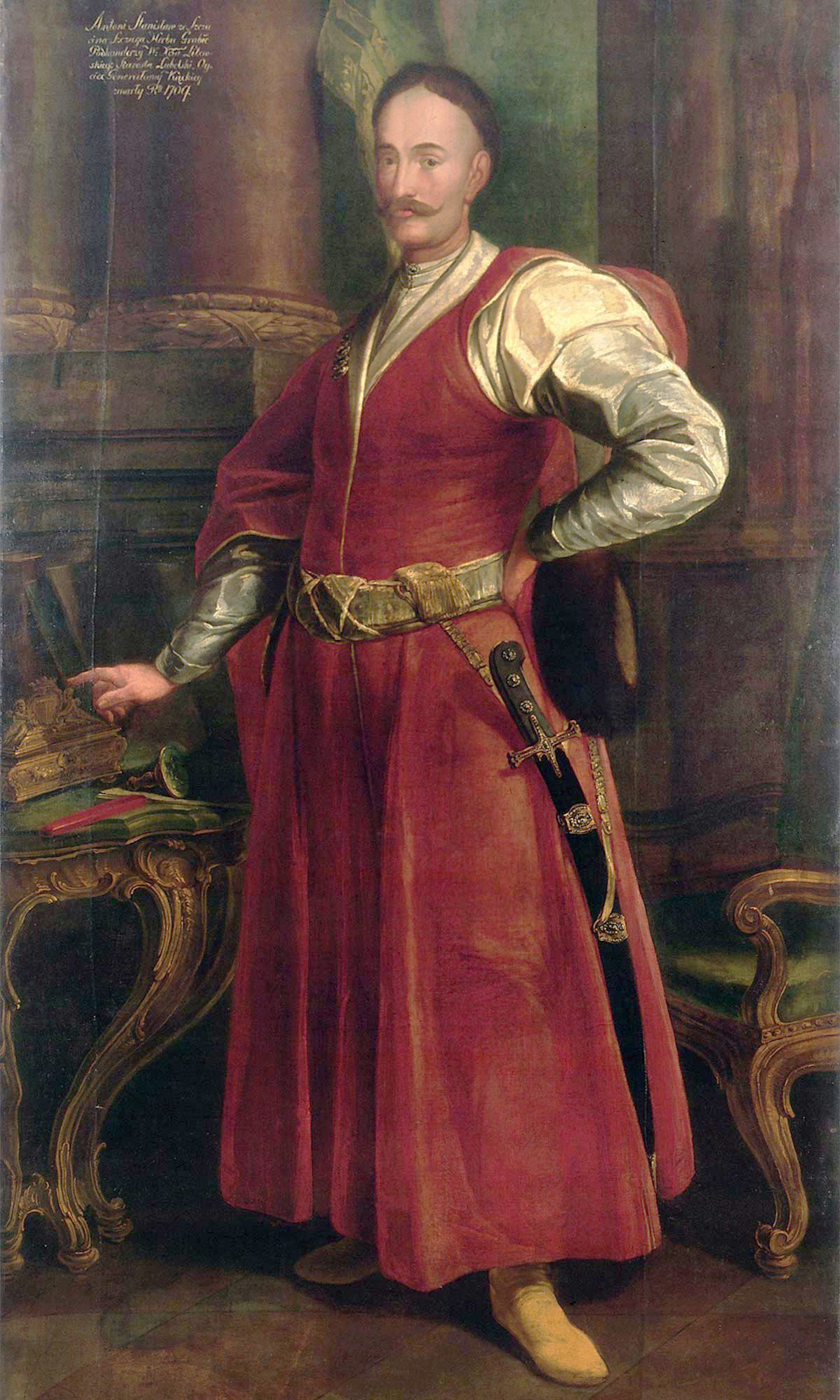
Right at the formation of the Polish national state, the indoctrination began: in 1920 both Semadenis -- husband and wife -- then still boyfriend and girlfriend -- wrote their Baccalauréat thesis on the subject: Does Poland belong to Western European civilization or Central European civilization? They both answered correctly (and passed): Western. In their case it's no surprise: they were Lutherans of German and Swiss origins. How else could they answer? But the answer was de rigeur for all, it would seem, not only recent immigrants form the West.

The indoctrination job has been done well in Poland: formerly close ties of Poland to the East -- Turkey in particular -- have been programatically wiped out from Polish collective memory. Yet the proof of the connection lies everywhere; at the linguistic level the most basic items bear Turkish names: pierogi (the national dish); palto (coat: can't live without one); torba (bag); wisnia (national fruit). The national dress -- kontusz -- was defended in the 18th century against the effeminate French fashion as truly Polish; it was, of course, Turkish (by way of Hungary). As was the hairstyle, the obligatory drooping mustache and the saber. (The saber is still obligatory: I own one).

Simply put, the Polish eternally western nature is -- a fraud. But never mind that: why waste my time fighting the nation-building indoctrination in Poland? All nation building indoctrination is equally stupid, whether in Poland or in India or Lapland; and I could never fight it all: who am I, a lone voice, against a sea of nonsense? Let them do their foolishness as they please.

But digging up layers of Turkishness in Poland is fun. It's not unlike archeology.

Here is one of my more entertaining recent digs:

Last November I passed through Kęty, or Kąty, in Upper Silesia. The name -- literally "corners" -- used to carry the connotation of "boonies" or "sticks", which Kęty was and still is. No offense: I am partial to sticks. Now, Kęty's coat of arms, proudly displayed at all city entrances, looks like this.

I laughed out loud. The right field is pure Chintamani (Çintamani), of course: three balls in pyramidal arrangement and two wavy lines. (Here is an example).

Chintamani was one of the principal elements of Turkish figurative design -- in textiles, in Iznik pottery, wall tiles, etc. It's origin lies in a banner the Ottoman rulers had adopted: three balls of Timur-e-Lang plus two stripes of Rustam's tiger-skin.

A friend who was traveling with me dug up the facts: sometime in the thirteenth century a prince of Silesia hunted somewhere in the sticks and finding an eagle's nest with three eggs in it close by a stream, decided to found a town there. (And why not). Hence the three balls (eggs) and two stripes (stream).

Hence, not Turkish but Polish?

Well, the source of the coat of arms may not be Turkish; but it is hard to believe that whoever drew this coat of arms -- with that particular arrangement of balls, and the two parallel wavy lines (in other coats of arms streams are represented with three lines) had not seen the Chintamani. I am sure he did. Perhaps he even owned a Turkish chintamani velvet.

Taken in a charge on a Turkish camp, of course.


*

A word about Chintamani:

It was just Rustam's two tiger stripes until Timur suddenly turned up: check out this link: you will see a portrait of Osman I, the founder of the Turkish state in Anatolia wearing a half-Chintamani, as it were: a tiger-stripe pattern kurta, gold on blue1. No balls.

Now, here is the thing: Osman predated Timur; at his time the Turks had not yet had the opportunity to learn the -- er -- shall we say -- burning significance of the three balls.

Now look at the illustration at the top of this post. Ipek, Imperial Ottoman Silks and Velvets calls it "a striking pattern in an unusual color combination". One wonders if the editors had seen the Osman portrait.

_____________

1 By the way, the word kurta lives in Polish as "kurtka", i.e. "small kurta", i.e. "jacket", and has nothing to do with German kurtz, though no doubt, the Semadenis' Baccalauréat thesis would have had you believe otherwise.

I should also mention here, I suppose, that the name Semadeni is originally Italian, or rather, to be precise, Savoyard, not Swiss; so much for the native Swiss Germanness of the Semadenis, I suppose.

24.6.09

Bursa velvets

16th century, Turkish. Made in Bursa. Gulbenkian collection, Lisbon.

The persistent idea is of staggered rows of circles. Some circles morph into carnations and some -- into thistles. And others into flower arrangements. The pattern works -- but one wonders where it derives from.

Some patterns have a superimposed frame (a la Sanguszko carpet -- Heaven's Gate?). The frame, when present, seems always asymmetrical: it cuts through the circles differently at bottom than at top, suggesting that the design was directional -- to be hung one way but not the other.

One wonders why and hopes the museum got it right.


The circles can sometimes be arranged in neat rows, too. Here they seem to incorporate the idea of the chintamani pattern (of which more anon):


A great number of these was once exported to Poland; many workshops in Bursa (and later in Istanbul) existed solely for the purpose of production against Polish orders. Polish merchants in Bursa had a special tax dispensation, allowing them a lower export duty on their shipments to Poland (the Sultan being kind to his best customers). The National Museum in Cracow has a large collection of these makaty (Polish: wall hangings; from Arabic: maq'ad, a small sitting carpet).

But the influx of New World gold into Europe in the sixteenth century, and the subsequent price revolution, allowed Europeans -- including Poles -- to offer very high prices for these velvets; prices which Turkish nobles could not match. To prevent the draining of Bursa velvets out of the Empire, the Ottoman government then banned their export. One of the consequences of this decision was that Italian weavers began to make fake Bursas (many in Chintamani pattern) for export to Poland.

23.5.09

An Ottoman Fairy Tale

.
I have found myself recently with a few hours on my hands while waiting for a plane at the Istanbul airport. Unlike most airports in the world, which all look alike and sell the same machine-made overpriced junk -- the Ataturk makes an effort to include traditional Turkish handicrafts and foods, which makes a layover interesting. As I wondered around, sampling foods and inspecting tiles and embroidery, I suddenly I remembered a story. As far as I know, this story is a work of fiction and all resemblance to real people, places, or events is entirely accidental. Well, then:


بسم الله الرحمن الرحيم


Sometime in the early spring of the year 17... the Sultan and his favorite wife were enjoying a bit of lokum in the Flower Room1:


when the grand vizier approached softly, respectfully bent in half, bearing in his hands a meticulously executed report2:


The gist of the report was this: in a remote corner of the world known as aṣ-Ṣūmāl a new kind of dish was discovered; the spies who had eaten it have reported experiencing in the wake of its consumption the feelings of light-headed delight, blissful contentedness and delicious sluggishness.

Even the briefest perusal of the hypothesized recipe made it amply clear why this should be so:

Pilaff With Herbs and Gum Mastic

Ingredients:

500 gr Basmati rice
150 gr butter
1/4 tsp salt
750 gr meat stock
1/4 bunch parsley, finely chopped
1/4 bunch dill, finely chopped
1/4 bunch fresh mint, finely chopped
4 green onions
1/4 bunch radicchio
1/2 tsp ground ginger
4 cardamom pods, crushed
2 drops of gum masti

Preparation:
Wash and drain the rice. Melt the butter in a skillet, add the rice and saute for 3-4 minutes. Add the finely chopped herbs and green onion and mix well for 4 minutes. Add the salt, ginger, gum mastic and cardamom. Then add the meat stock and mix again. Lower the heat and let steep over low heat for 5-6 minutes. Finally, stir with a spoon. Serve piping hot.

Although the power of the report had been intentionally muted by the scribes, who, to protect the innocent, excluded graphic representations of the appearance of the dish when it is served in a sweet-dough casing with pine-seeds:


yet, the Sultan's favorite wife unwittingly (and near-imperceptibly) moved her ample lips somewhat while listening to the report all the same3:


(And who could blame her? I can see your lips are moving, too).

"Excellent!" exclaimed the Sultan and clapped his hands in delight. "That resolves the issue!"

(The Sultan and the grand vizier had spent the whole winter fruitlessly trying to decide what target to choose for the traditional spring campaign: whether to invade Azerbaijan again, or to besiege Vienna, which has not been besieged now for a few years. Neither objective excited them: it was just more of the same tiresome, dull, dreadful same-old-same-old; Azerbaijan-Vienna, Vienna-Azerbaijan. And the food was dreadful).

But now, unexpectedly, a new, fresh, obvious target has suggested itself!

"Dispatch the Janissaries immediately!" exclaimed the Sultan.

(The name Yanissari literally means "though guys in slippers":)


The following morning the sounds of the Janissary orchestra could be heard wafting in from the outer courtyard as the troop assembled and departed for the campaign (press to play):


Later that summer aṣ-Ṣūmāl was added to the Grand Empire as its sixty seventh province (making for a kind of ornamental tail); and the dish entered the Ottoman dietary mainstream4 for centuries to come.


__________


Footnotes and Disclaimers:


بسم الله الرحمن الرحيم : the Basmalla: "In the name of God, the Merciful, the Compassionate". (What did you think it was?)

1
The flower room does exist in the Harem of the Topkapi. The flowers look to me a lot like something from Jahangir's book of flower designs; they may have come to Istanbul by way of a Mughal carpet, perhaps like the one in the Gulbenkian.

2 I'm lying, of course. This work is a Hilya, which is a genre of calligraphic work embodying the Prophet’s moral, behavioral, and spiritual qualities as well as aspects of his physical appearance. I allow myself this act of borderline disrespect in this instance because the work is also an Icazet, that is, a diploma awarded by the teacher to a student of calligraphy after examination of a piece of calligraphy written by the student in the presence of a his/her teacher or teachers. This example is signed by several teachers of the calligrapher Mehmet Ferit (18th century). (Special thanks to Journal of Ottoman Calligraphy).

3 Lying again! The dish is Safavid and represents a male prince. (Special thanks to the British museum).

4 More lies. Somalia was never part of the Ottoman empire and elaborate pilafs were part of Turkish diet long before the conquest of Istanbul.

*

(God, what a fun way to waste a perfectly good morning this has been!)

15.5.09

Ottoman calligraphy on leaf


1) Take a leaf
2) Inscribe in gold ink or overlay with gold leaf
3) Soak in alkaline solution until connective tissue dissolves
4) Gild

The inscription is a formulaic prayer: "O Lord, grant me a good entry and a beautiful exit and support me with Thy might". The leaf is the especially difficult to handle (because fragile) chestnut.

Agha Khan collection.